
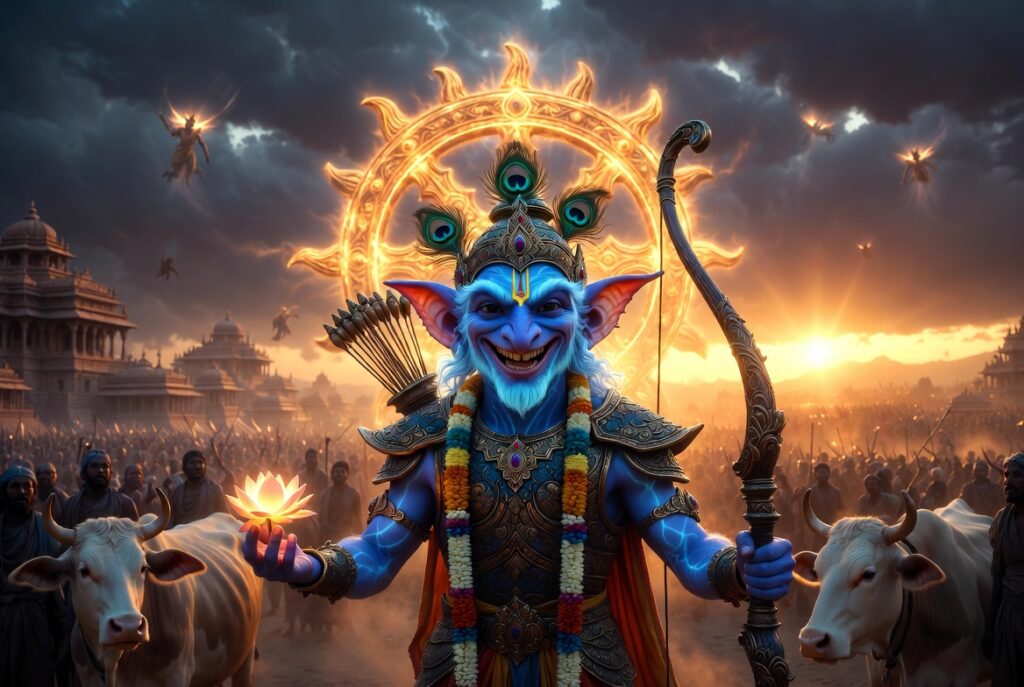
For those that know
The warrior caste in Hinduism, known as the Kshatriyas, followed one of the most detailed ethical systems for combat and leadership in the ancient world. Their code was not simply about fighting — it was a sacred duty to protect the innocent, uphold cosmic order (dharma), and wield power with restraint. This code evolved from the Vedic spirit of divine warriors like Indra and reached its fullest expression in the Bhagavad Gita, the Mahabharata, and the Manusmriti.
Origins of the Code
The earliest Vedic hymns portray Indra as the archetypal protector who slays the demon Vrtra to release the life-giving waters and shield the righteous. This established the core idea: strength exists to defend the vulnerable from chaos and harm. Over time, this principle was refined into a practical code for human rulers and warriors. By the epic period, the Kshatriya dharma had become a precise set of responsibilities and restrictions designed to prevent power from becoming tyranny.
A Kshatriya was expected to be both fierce in battle and just in peace. His sword was not a tool for personal glory but an instrument for safeguarding dharma itself.
1. Primary Duty: Protect the Innocent
The foundational principle of the Kshatriya code was the protection of those who could not defend themselves. This included women, children, the elderly, Brahmins, cows, the poor, and anyone under threat from injustice.
The Bhagavad Gita states clearly in verse 2.31:
“There is no greater good for a Kshatriya than a righteous war. Happy are the Kshatriyas to whom such fighting comes as a natural duty.”
This verse frames protection as both a privilege and a sacred obligation. In the Mahabharata’s Shanti Parva, Bhishma teaches that a king must act like a banyan tree — his protection must shelter everyone under his care. The Manusmriti (7.2-3) explains that the Creator formed the Kshatriya specifically “for the protection of the people.”
War was therefore justified only when it served this protective purpose. A warrior who failed to rise in defense of the innocent committed a grave failure of duty.
2. Fight Only for Dharma, Never for Personal Gain
The code strictly limited the reasons for going to war. A Kshatriya could fight only when dharma — justice, order, and the safety of the innocent — was under direct threat. Personal ambition, revenge, greed, or territorial expansion were forbidden.
The Bhagavad Gita reinforces this in verses 2.32-33:
“If you do not fight this righteous war, you will incur sin by neglecting your duty and lose your honor. People will forever speak of your dishonor, and for a man of honor, dishonor is worse than death.”
Krishna emphasizes that refusing to protect dharma when one has the power to do so is itself a moral failing. The Mahabharata repeatedly shows the consequences of violating this rule. Warriors who fought for selfish reasons ultimately brought ruin upon themselves and their societies.
3. Strict Rules of Engagement in Battle
One of the most distinctive features of the Kshatriya code was its detailed rules of warfare, often called dharmic warfare. These rules aimed to minimize unnecessary suffering and preserve human dignity even amid conflict.
Key prohibitions included:
- Never attacking the unarmed, sleeping, wounded, retreating, or those who had surrendered.
- Never targeting women, children, the elderly, Brahmins, or the disabled — even on the opposing side.
- Avoiding the use of poison, fire against non-combatants, or the destruction of crops and water sources.
- Fighting fairly, preferably one-on-one, and pausing if an opponent’s weapon broke or chariot wheel failed.
- Showing mercy after victory and treating the defeated with dignity.
These rules appear throughout the Mahabharata, particularly in Bhishma’s teachings in the Shanti Parva. Breaking them was considered a serious violation of dharma. Historical examples from the epic illustrate the consequences: the unfair killing of Abhimanyu and the nighttime massacre of sleeping warriors by Ashwatthama were condemned as grave breaches that brought curses and lasting shame.
The Manusmriti echoes these principles, emphasizing that a righteous king must punish only the guilty and protect the innocent even in times of war.
4. Personal Courage and Integrity
A Kshatriya was expected to face danger with courage and never flee from battle out of fear. Honor and integrity were considered more valuable than life itself.
The Bhagavad Gita addresses this directly in verses 2.34-36:
“People will speak of your eternal dishonor… and for a man who has been honored, dishonor is worse than death.”
This principle was not about reckless bravery but about maintaining moral authority. A warrior who abandoned his post through cowardice lost the right to lead or protect others. At the same time, strategic withdrawal was permitted when it served the greater good of dharma.
5. Mercy and Justice After Victory
The code extended beyond the battlefield. Once victory was achieved, the victorious Kshatriya was required to show mercy and restore order. The defeated were to be treated with justice rather than subjected to unnecessary cruelty or enslavement.
The Mahabharata’s Shanti Parva teaches that a true conqueror protects the vanquished “as his own children.” This approach helped prevent endless cycles of revenge and allowed society to heal after conflict.
6. The Cosmic Principle: Dharmo Rakshati Rakshitah
A central teaching of the code is captured in the Manusmriti (8.15):
“Justice being preserved, preserves; justice being violated, destroys. Therefore justice must never be violated, lest violated justice destroy us.”
This principle, often summarized as “Dharma protects those who protect it,” assured warriors that acting in accordance with dharma would ultimately bring them protection from the universe itself. Those who abused power, by contrast, would eventually face the consequences of their actions.
7. Inner Discipline and Detachment
The Bhagavad Gita elevates the warrior code to its highest philosophical level. Krishna teaches that even while performing his duty with full commitment, the Kshatriya must remain detached from the fruits of his actions — whether victory, glory, or personal gain.
Verse 2.47 states:
“You have the right to work only, but never to its fruits. Perform your duty equipoised, O Arjuna, abandoning all attachment to success or failure.”
This teaching transforms the warrior into a karma yogi — someone who acts with total dedication yet without ego. It represents the spiritual culmination of the Kshatriya path.
Historical Context and Application
The code was not merely theoretical. Kings and warriors were expected to study these principles and apply them in governance and combat. Training included both martial skills and deep study of dharma. The ideal Kshatriya combined physical strength with moral wisdom.
While the code was sometimes broken in practice — as the Mahabharata itself demonstrates — its existence shows that ancient Indian civilization placed significant ethical constraints on the use of force. These rules influenced later Hindu thought on just war and righteous leadership.
Enduring Relevance
The Kshatriya code offers timeless lessons about the responsible use of power. It reminds us that strength is meaningful only when directed toward protection and justice. In a world where power is often misused, the ancient principles of fighting only for dharma, observing rules of engagement, showing mercy, and acting without attachment remain profoundly relevant.
This code stands as one of humanity’s earliest attempts to civilize warfare and align martial duty with higher moral and spiritual principles. It continues to inspire those who seek to understand how courage, honor, and compassion can coexist in the face of conflict.